How to Choose Knife Blade Steel Based on Customer Budget and Maintenance Habits
A knife line can fail for reasons that never show up in the catalog copy. The steel may be “premium” on paper, but too hard to sharpen for the buyer’s end customer. Or the price may look attractive, but corrosion complaints start after the first month of home use.
For private-label kitchen knives, blade steel is not only a technical choice. It is a commercial decision. The right steel should match three things at once: target retail price, customer maintenance habits, and the brand promise.
That is where a good OEM knife manufacturer should act as more than a production supplier. The factory should help connect steel selection with real market behavior, so buyers can build a knife range that sells well, earns trust, and protects margin.
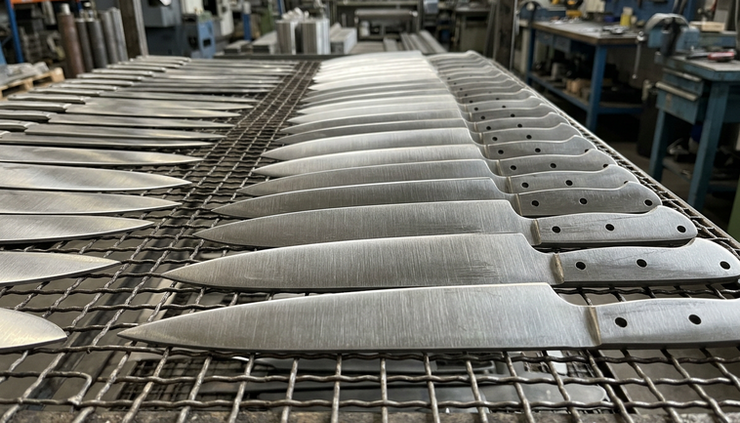
Start with the customer, not the steel grade
Many sourcing projects begin with a steel name. A buyer asks for German 1.4116 steel, VG-10, 440C, or another familiar grade because competitors use it. That is understandable, but it can lead to poor product-market fit.
The better starting point is the end user.
Ask four questions before choosing blade steel:
What price range will the knife sell at?
How often will the customer sharpen the knife?
Will the knife go into the dishwasher?
Does the brand promise easy care, premium sharpness, or professional performance?
A supermarket knife, a gift set, and a high-end chef knife may all look similar in photos. Their users treat them very differently. Some customers wipe and dry knives immediately. Others leave them wet in the sink. Some understand whetstones. Many only use a pull-through sharpener once or twice a year.
Steel selection should reflect that reality.
Match steel to budget bands
For B2B cutlery sourcing, the most useful steel discussion starts with retail positioning. Steel cost affects blade cost, heat treatment requirements, processing difficulty, scrap risk, and the story the brand can tell.
The table below gives a practical way to think about common kitchen knife steel tiers.
Market position | Typical customer expectation | Suitable steel direction | Commercial advantage | Main risk to manage |
Entry level | Affordable, rust resistant, easy to use | 3Cr13, 420J2, basic stainless grades | Low cost and simple care | Lower edge retention |
Value mid-range | Better sharpness, decent durability, still easy care | 5Cr15MoV, X50CrMoV15, 1.4116 | Balanced performance and cost | Needs clear quality control |
Upper mid-range | Noticeably better cutting feel and longer edge life | AUS-8, 440C, higher-carbon stainless options | Stronger product story | Can be less forgiving |
Premium | High sharpness, refined finish, enthusiast appeal | VG-10, powder steels, specialty stainless grades | Higher perceived value | More demanding care and process control |
This is not a fixed rule. Heat treatment, blade geometry, grinding, handle design, and final inspection also shape performance. Still, the table helps avoid a common mistake: putting an expensive steel into a product aimed at customers who will not maintain it properly.
A buyer can pay for a premium steel and still receive poor reviews if the end user expects dishwasher-safe convenience. In that case, a balanced stainless grade may protect the brand better than a headline material.
Why X50CrMoV15 works for many private-label programs
X50CrMoV15, also known in many markets as German 1.4116 steel, is popular for a reason. It offers a practical balance of corrosion resistance, toughness, sharpenability, and cost. For many private-label partners, an X50CrMoV15 kitchen knife gives enough performance to justify a stronger retail price without creating excessive care demands.
This steel is especially useful when the target customer wants a kitchen knife that feels better than entry-level products but still remains easy to live with.
Its key strengths are:
Good corrosion resistance Useful for home cooks who may not dry knives immediately every time.
Friendly sharpening behavior Easier to resharpen than many harder premium steels.
Stable production performance Suitable for consistent heat treatment and repeatable mass production.
Clear marketing language “German stainless steel” is easy for retail customers to understand.
That combination makes X50CrMoV15 a strong choice for mid-range knife blocks, chef knife sets, santoku knives, and retail programs that need reliable reviews.
The trade-off is edge retention. It normally will not hold an edge as long as harder premium steels. For many mainstream customers, that is acceptable because they value easy care more than maximum cutting endurance.
Maintenance habits should guide hardness and corrosion resistance
A blade steel decision is also a maintenance decision. Two customers can buy the same knife and have very different experiences based on how they clean, store, and sharpen it.
Low-maintenance customers need forgiving steel
If the target customer may use dishwashers, leave knives wet, cut acidic foods often, or store knives loosely in drawers, corrosion resistance and toughness should come first.
For this group, avoid making hardness the main selling point. A slightly softer, more forgiving stainless steel can reduce chipping, rust complaints, and customer service pressure.
Good fit:
Basic stainless steels for low-price channels
5Cr15MoV for value sets
X50CrMoV15 or 1.4116 for better mid-range products
These steels support a “daily use” story. They suit customers who want a dependable kitchen tool, not a maintenance routine.
Careful home cooks can accept higher performance steel
Some buyers target cooking enthusiasts, premium gift buyers, or serious home cooks. These customers often accept hand washing, drying, and occasional sharpening.
For them, harder stainless steels can make sense. A 440C or VG-10 knife can offer stronger edge retention and a more premium story. The customer is more likely to understand that better performance may require better care.
Still, the brand must communicate clearly. If the packaging promises effortless maintenance while the steel needs careful handling, returns and complaints may rise.
Professional users need a different balance
Restaurant and food-service users often sharpen frequently. They also work fast and may treat knives roughly. For this group, toughness and quick sharpening can matter more than long edge retention.
A super-hard blade that chips during fast prep work can become a liability. In many professional settings, a tough stainless blade that sharpens quickly may perform better over time.

Think beyond steel names and check production control
Steel grade matters, but it does not work alone. Two knives made from the same steel can perform very differently if heat treatment and geometry differ.
For sourcing teams, the factory should be able to discuss:
Target hardness range
Heat treatment method
Blade thickness and taper
Edge angle
Grinding consistency
Corrosion testing approach
Packaging care instructions
Expected sharpening behavior
A steel grade without process control is only a specification on paper. The factory’s real value comes from making that specification repeatable.
For example, a mid-range knife made from X50CrMoV15 can feel excellent if the heat treatment, edge geometry, and polishing are well controlled. The same steel can feel ordinary if the blade is too thick or the edge is poorly finished.
This is why a sourcing discussion should not stop at “Can you make this steel?” A better question is “What performance can we promise with this steel at this price point?”
Choose steel based on margin strategy
High-margin kitchen knives do not always require the most expensive steel. They require a good match between cost, story, performance, and customer satisfaction.
There are three common margin strategies.
Build value through reliability
For mass retail and promotional channels, the steel should reduce complaints. A corrosion-resistant stainless grade with stable production quality can protect margin better than a harder steel that creates after-sales issues.
This strategy works for knife sets, starter kits, and everyday cooking tools.
Build value through a clear upgrade
For mid-range private-label lines, X50CrMoV15 or 1.4116 can create a clear step up from entry-level knives. The product can claim better sharpness, German-style stainless performance, and easy maintenance.
This is often a strong balance for online retail, department stores, and branded kitchenware collections.
Build value through enthusiast appeal
Premium lines need a stronger technical story. VG-10, layered stainless construction, or specialty steels may support higher pricing. The customer expects better edge retention, finer finishing, and a more refined cutting feel.
This strategy needs better education. Care cards, packaging copy, and product pages should explain hand washing, drying, and sharpening.
Use a simple decision path before sampling
Before requesting samples, map the product line with a clear decision path.
Define the retail price band.
Identify the customer’s likely maintenance habits.
Choose the performance priority, such as corrosion resistance, edge retention, toughness, or easy sharpening.
Select two or three steel options that fit the target cost.
Confirm heat treatment and hardness targets with the factory.
Test cutting feel, corrosion behavior, and sharpening response.
Match packaging claims to what the steel can truly deliver.
This process prevents over-specification. It also helps avoid choosing steel only because it sounds premium.
A practical sample plan might include one value option, one balanced option, and one premium option. For example, a buyer developing a mid-range chef knife could compare 5Cr15MoV, X50CrMoV15, and 440C. The best choice may not be the hardest steel. It may be the one that fits the customer’s habits and the brand’s price target.
The best steel is the one your customer can succeed with
Knife steel should support the buyer’s business model, not just the product sheet. A good blade must cut well, resist reasonable wear, match the price point, and fit the care routine of the real customer using it.
For most private-label knife programs, the right answer is rarely “the most premium steel available.” It is the steel that creates dependable performance at the right cost, with a maintenance level the customer can handle.
That is where an experienced OEM partner adds value. The factory should help compare steel grades, explain trade-offs, tune heat treatment, and recommend the option that protects both brand reputation and margin. When steel selection starts with customer behavior, the final knife becomes easier to sell, easier to maintain, and easier to trust. Which steel profile aligns with your upcoming brand strategy? Whether you need high-volume durability or premium edge retention, our OEM desk is ready to engineer your next bestseller.
Drop a comment, message us to evaluate your blueprint, or explore our factory capabilities directly:


Comments